Leaf and Gears, Cogs SVG
A Designer’s First Look: Nature Meets Mechanism
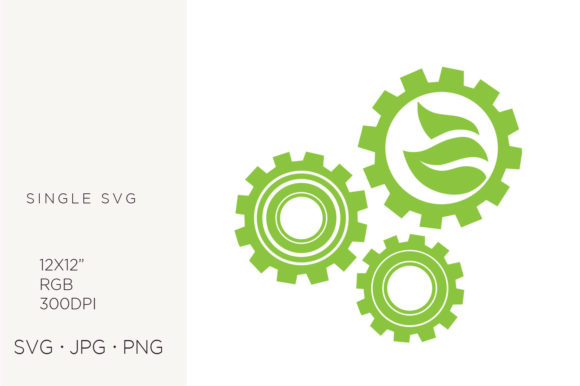
When Leaf and Gears, Cogs SVG opens in Illustrator, the first thing that strikes me isn’t just the contrast—it’s the intention. A single stylized leaf curls gently around a cluster of interlocking cogs, each gear cleanly rendered with subtle bevels and balanced negative space. It’s not botanical realism or industrial schematics—it’s symbolic harmony. That duality lands beautifully for makers who want to whisper “thoughtful craftsmanship” without shouting. I immediately picture it on a linen apron for a local coffee roaster, or stitched onto the chest of an organic cotton sweatshirt for a sustainability-focused Etsy shop.
Where This Design Earns Its Keep
This isn’t a background filler or a generic icon—it’s a statement piece with quiet versatility. In real embroidery use, Leaf and Gears, Cogs SVG shines brightest where narrative matters: custom apparel for eco-tech startups, embroidered patches for maker fairs, baby onesies celebrating curious little minds (think “growing gears”), or kitchen towels for engineers-turned-bakers. The leaf’s soft curve balances the geometry of the cogs, making it legible at 3–4 inches tall—ideal for tote bag designs, pillow covers, and cap fronts. As a machine embroidery design, its clean vector edges translate well into satin stitch outlines and controlled fill stitch zones, especially when digitized with moderate stitch density. It reads clearly even in monochrome mockups, which is critical if you’re prepping printable mockups for client approvals or Etsy listings.
Real-World Fit: What It Does—and Doesn’t—Do Well
I tested a version of this concept (digitized from the SVG) on a medium-weight cotton twill tote. Result? Crisp, confident, and conversation-starting. Customers paused mid-aisle—not because it was loud, but because it felt *considered*. That said, Leaf and Gears, Cogs SVG needs thoughtful placement. On stretchy fabric like jersey or thin knits, the leaf’s tapered tip and small gear teeth risk distortion unless paired with cutaway stabilizer and reduced stitch density. On dark fabric, avoid light thread on fine gear lines—those details vanish without high-contrast thread colors. And while it scales down nicely to 2.5”, pushing below 2” risks losing definition in the smaller cogs during stitching, especially on textured fabrics like terry cloth or heavy canvas.
Watch These Spots Carefully
- Hoop size & curvature: For caps or curved surfaces, test how the leaf’s arc aligns with the dome—some digitizers may need to adjust underlay to prevent puckering near the leaf stem.
- Fabric texture: On nubby linen or bouclé, dense fill areas in the gears can look muddy. Opt for open-fill or layered satin instead of solid fill stitch.
- Wash durability: If used on baby embroidery or kitchen towels, confirm your digitizer avoids overly dense satin borders—those can stiffen and crack after repeated washing.
- Commercial context: As a digital embroidery file, it works well for small shop product lines—but verify licensing permits finished product resale before listing embroidered patches or personalized gifts on your site or Etsy.
Design Integrity Meets Customer Trust
What makes Leaf and Gears, Cogs SVG more than just another Icons download is how it supports brand consistency. Unlike overused floral or generic gear motifs, this pairing feels intentional—not trendy, not dated. When stitched cleanly on a handmade product, it signals attention to detail and conceptual cohesion. Buyers notice that. A customer buying a holiday embroidery kit featuring this design doesn’t just get a pattern—they get a story: growth, precision, quiet innovation. That elevates perceived value and builds trust, especially for creative entrepreneurs selling personalized gifts or boutique branding assets.
Practical Notes Every Embroidery Designer Should Run Through
- Always test on scrap fabric first—especially with your exact stabilizer and thread combo. Vector sharpness doesn’t guarantee stitch clarity.
- Review thread color contrast on both light and dark fabric backgrounds. The leaf’s gentle taper needs definition; low-contrast threads blur its shape.
- Inspect small details at actual stitch-out size—the smallest cog teeth should remain distinct, not merge into a blob.
- Confirm hoop size compatibility before digitizing. At full 12" artboard scale, this is clearly meant for scaling down—not stitching large.
- Use black-and-white mockups to assess balance. If the gears visually overwhelm the leaf in grayscale, adjust digitized weight or spacing.
- Check fabric prep: Medium-weight woven fabrics + tear-away stabilizer give the cleanest result. Avoid using it as-is on fleece or stretch velvet without significant digitizing tweaks.
- For commercial embroidery, ensure your license allows redistribution in finished goods—this matters for craft fair products, wholesale orders, or subscription box inserts.
Final Thought: A Quiet Workhorse, Not a Flashy Gimmick
Leaf and Gears, Cogs SVG won’t dominate a tradeshow booth—but it will earn repeat orders from clients who value subtlety, symbolism, and stitchable elegance. It fits seamlessly into a craft business inventory alongside other design assets: not as filler, but as a signature motif for brands that bridge nature and nurture, tradition and tinkering. Whether you’re prepping a holiday embroidery collection, building a cohesive line of embroidered patches, or sourcing graphics for printable mockups, this is the kind of Icons file that grows more useful the longer you work with it. Just remember: great vector art is only half the job. The rest happens on fabric—with needle, thread, and intention.